

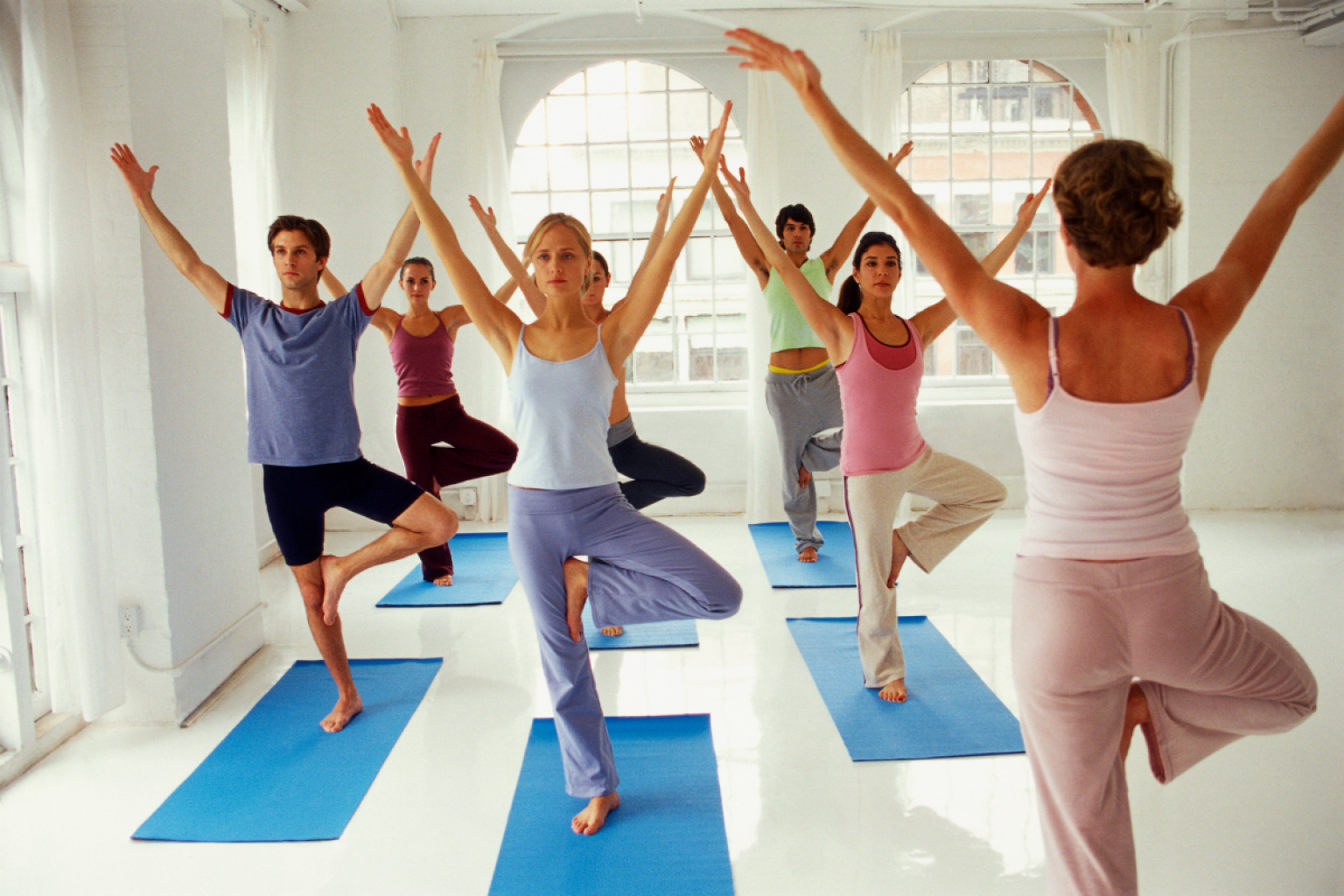
How to Improve Balance as You Age: Why Yoga Matters
Balance is one of those abilities most people take for granted until they start losing it.
Research has found that the ability to stand on one leg for 10 seconds is associated with health and longevity in middle-aged and older adults. It’s not a definitive test of how well you’re aging, but it does reveal something important about the relationship between balance and overall physical function.
Additional research: British Journal of Sports Medicine
Before you stop reading because you’re thinking, “I’m not worried about falling yet,” that’s exactly why this matters.
Balance doesn’t disappear overnight. Changes in muscle strength, coordination, reaction time, mobility, and sensory awareness can gradually make it harder for our bodies to maintain balance. And our minds and bodies are so good at adapting that we often don’t realize it’s happening.
But when our ability to maintain balance declines, suddenly a small misstep can mean a broken hip. Surgery. Loss of independence. Fear of movement. A long recovery. Sometimes, a significant change in someone’s ability to live independently.
Dozens of muscles, joints, ligaments, and tendons work together to keep us balanced. They need to stay strong, mobile, and responsive, and that requires regular maintenance, just like your car.
This is about preserving your ability to move through life with confidence, stability, and independence by setting yourself up for success NOW.
Why Do Balance Problems Sneak Up on Us?
We are incredibly adaptable. That’s usually a good thing, but sometimes it works against us.
Instead of addressing a weakness, we unconsciously work around it. We stop sitting on the floor because getting up feels harder. We become more cautious on uneven ground. We avoid movements that make us feel unstable.
Our world gradually becomes smaller without us realizing it.
The problem? Avoiding those movements doesn’t rebuild the strength, coordination, and responsiveness we’ve lost. In fact, it can contribute to further decline.
By the time a balance problem becomes obvious, we’ve often been compensating for it for years.
That’s why maintaining balance needs to be proactive, not reactive.
Nervous about getting started? We’ve got tips to ease your mind.
How Does Yoga Help Improve Balance?
Yoga helps improve balance by combining strength, coordination, mobility, and body awareness into one practice.
When you step into Tree Pose, Warrior III, or Half Moon, your body has to work continuously to keep you steady. Your feet and ankles respond to changes in your position. Your hips and core engage to stabilize you.
Even controlled transitions between poses require coordination and an awareness of where your body is in space.
At Golden Root Yoga, we believe the lessons of yoga extend well beyond the mat. When we wobble or fall out of a pose, we learn to take it in stride, reset, and try again without judgment or the expectation of perfection.
Because balance isn’t just about holding a pose. It’s about how we respond when things don’t go as planned. And that lesson applies just as much to life as it does to our physical practice.
A consistent yoga practice challenges the strength, coordination, mobility, and body awareness that help us maintain balance as we age, while reminding us that progress comes from showing up, not getting everything right.
When Should You Start Working on Balance?
The best time to work on balance is before you notice it’s becoming a problem.
Don’t wait until you feel unstable, fearful, or limited in your movement. Strength, coordination, and balance are abilities worth maintaining throughout your life, not just after they begin to decline.
At Golden Root Yoga, our classes offer opportunities to build strength, improve body awareness, and challenge your balance at your own pace. We provide guidance and modifications so you can work with your body, wherever you’re starting.
Don’t wait until your world gets smaller to start doing something about it. Check out the schedule and see what a consistent yoga practice can do.


